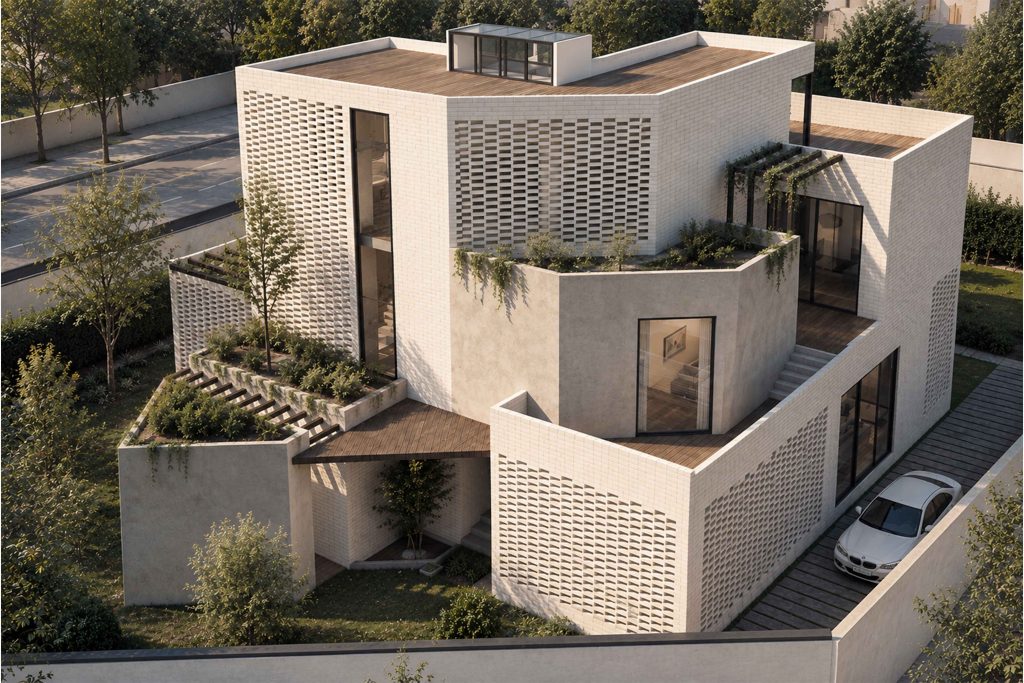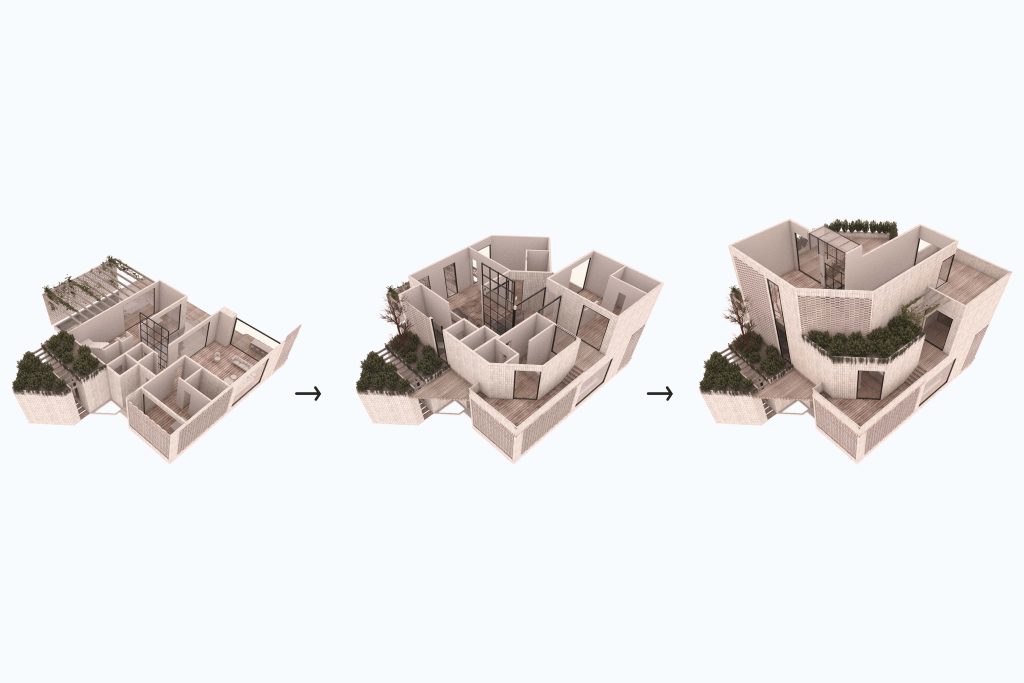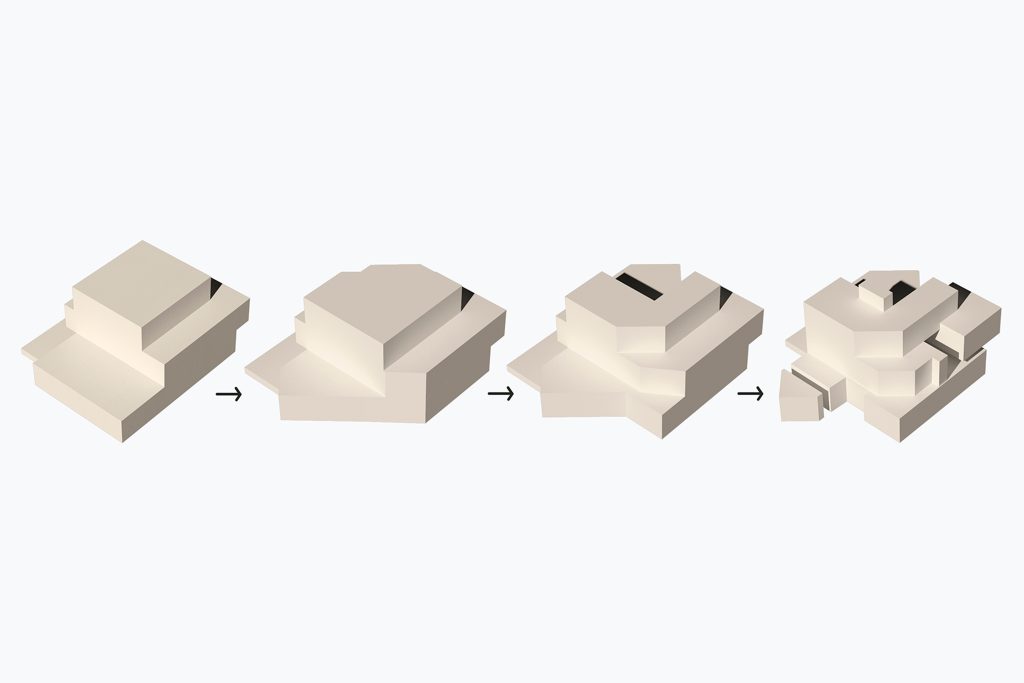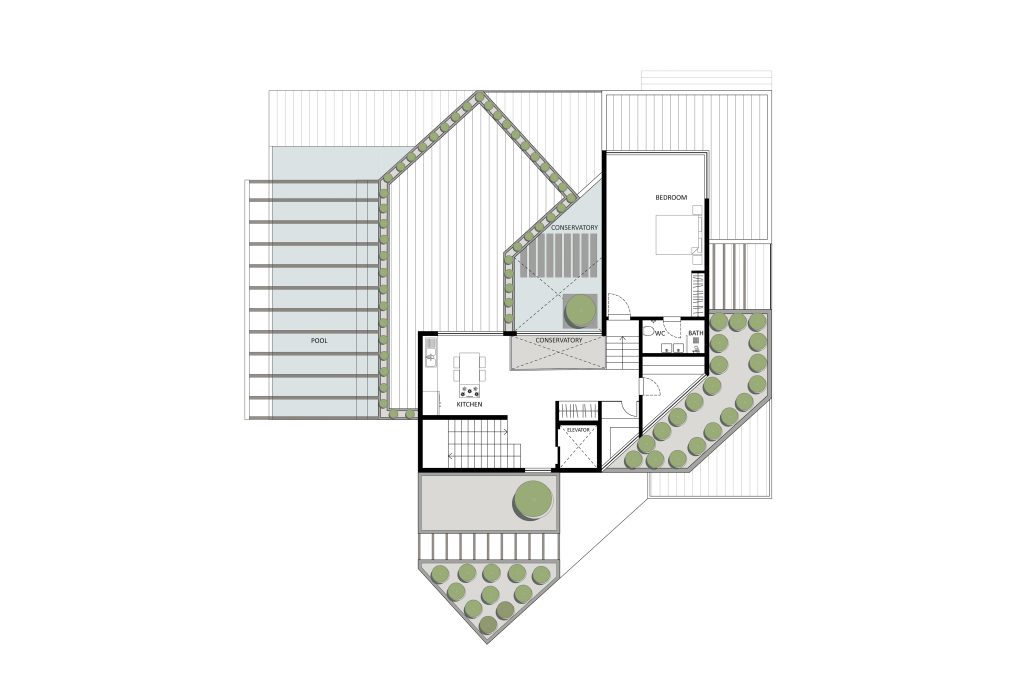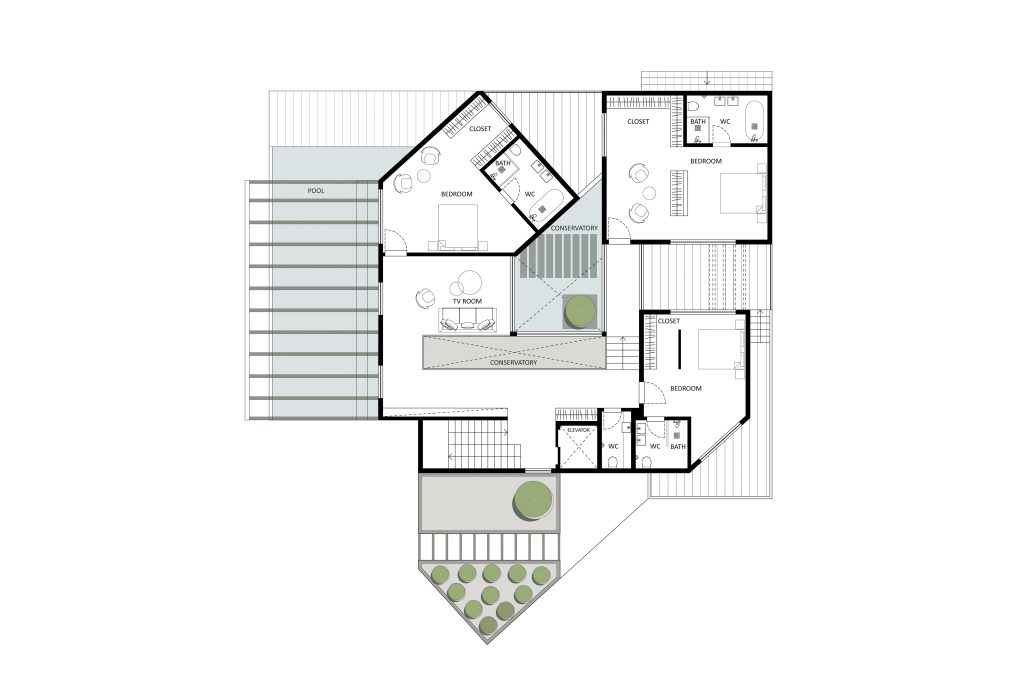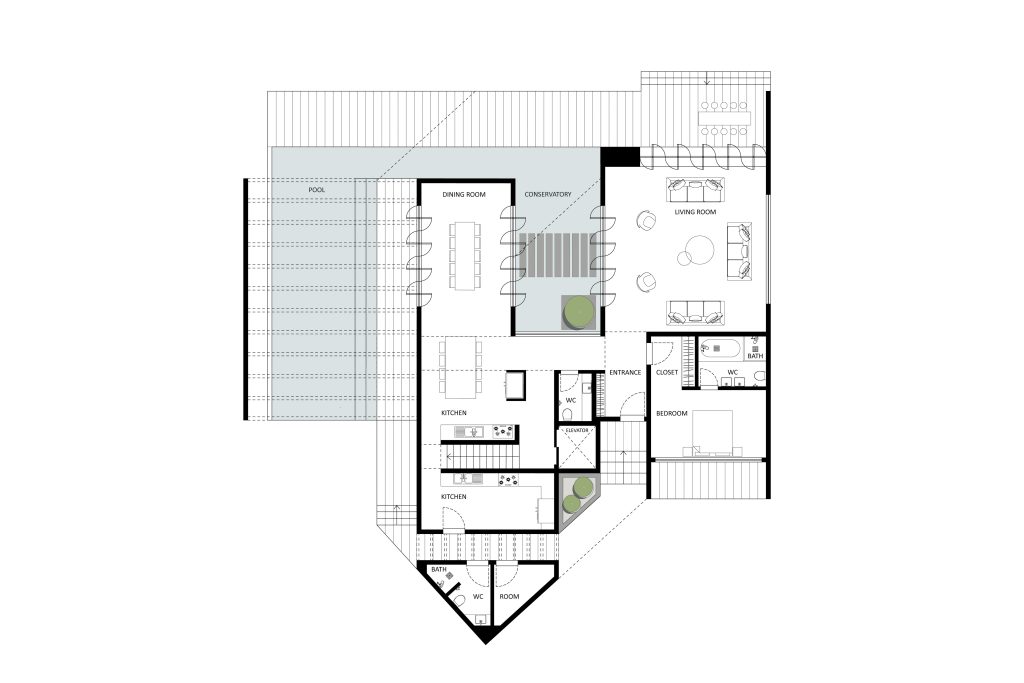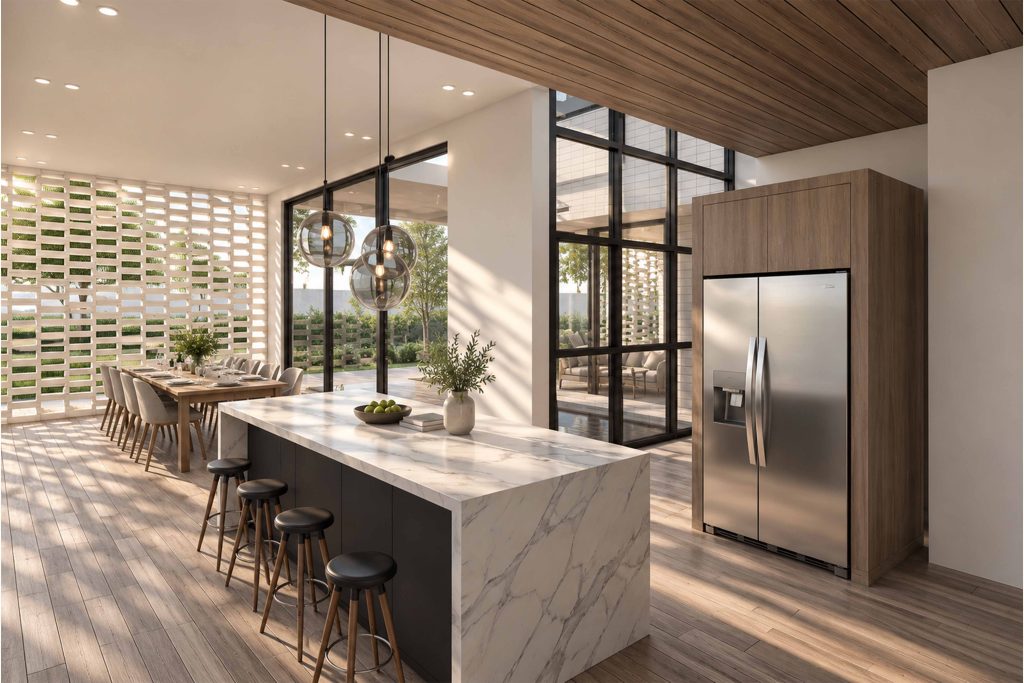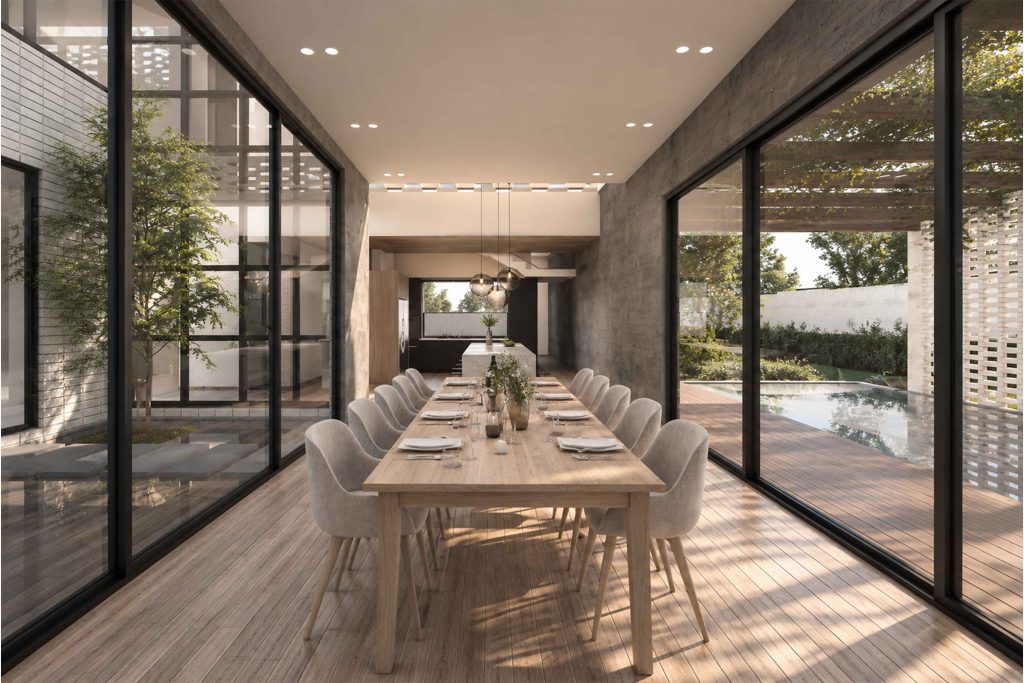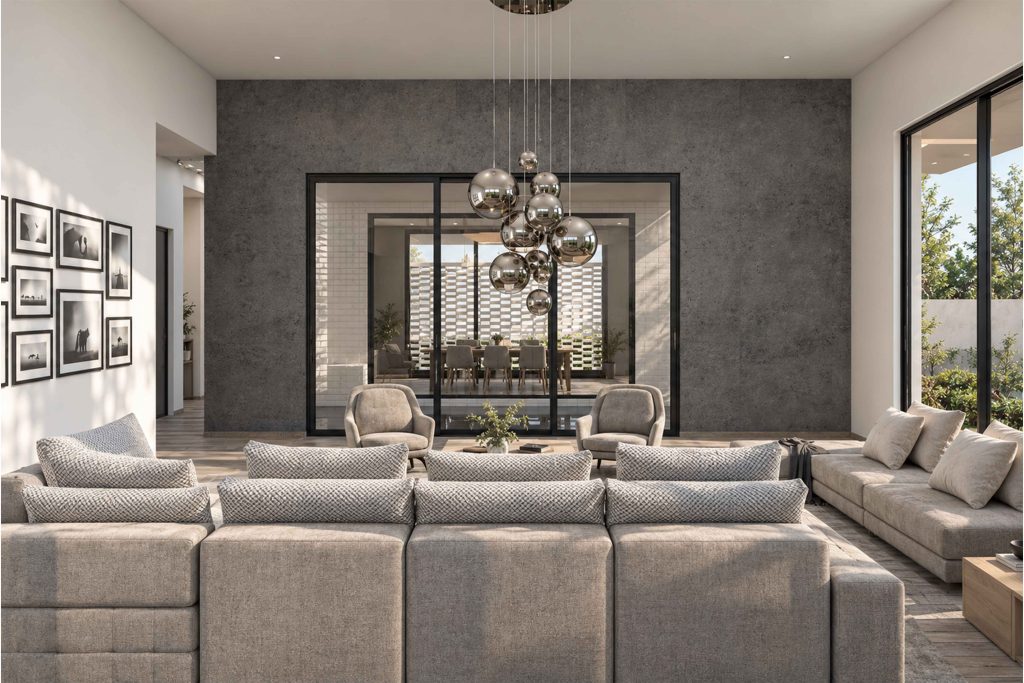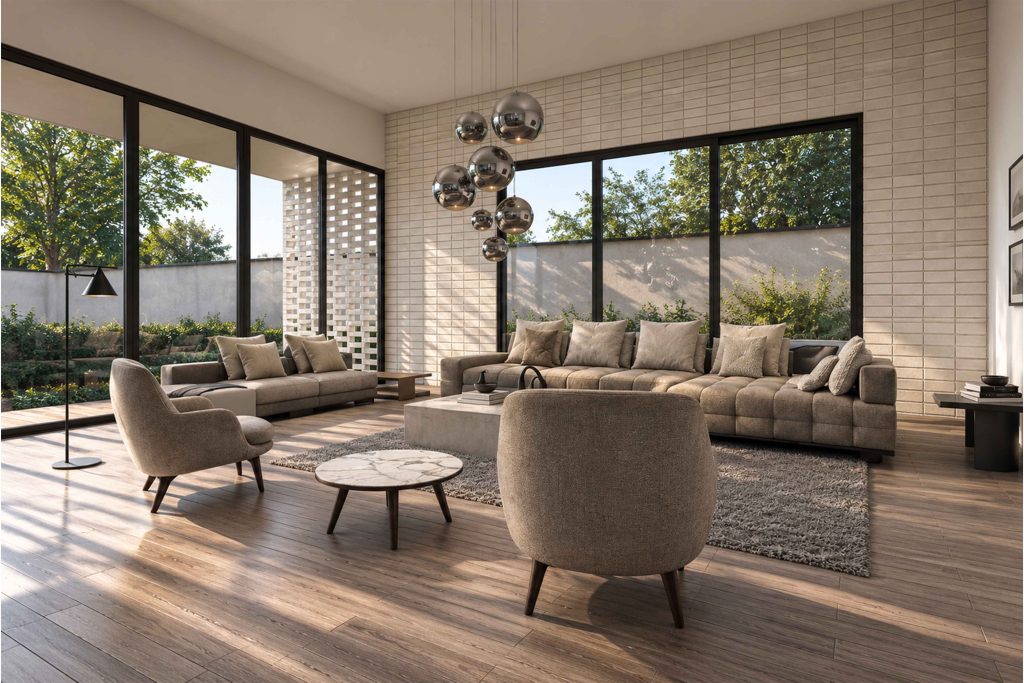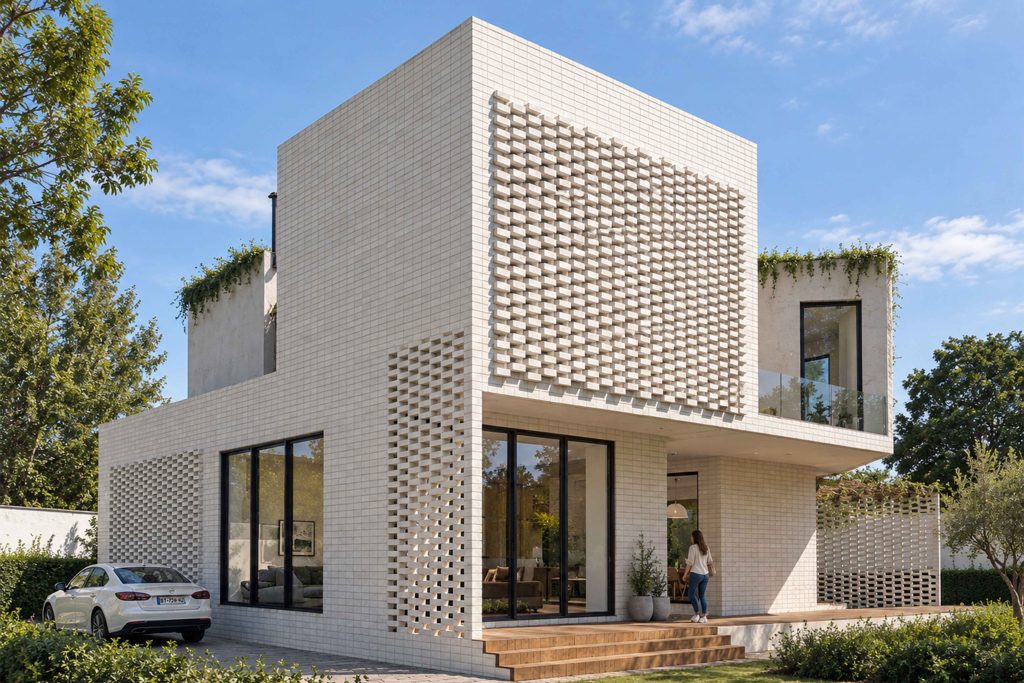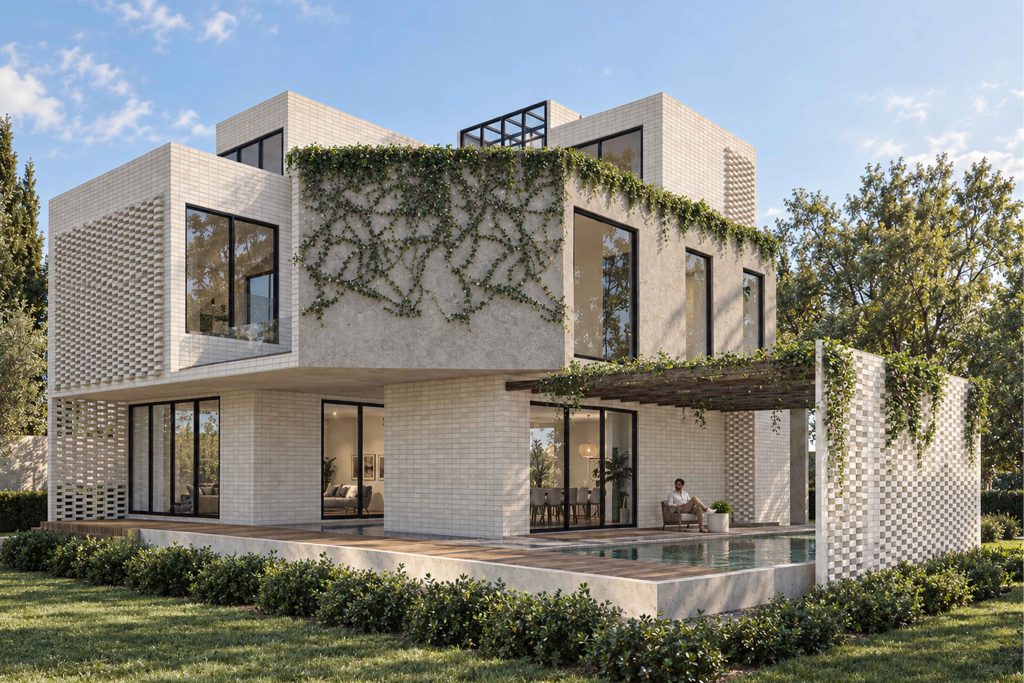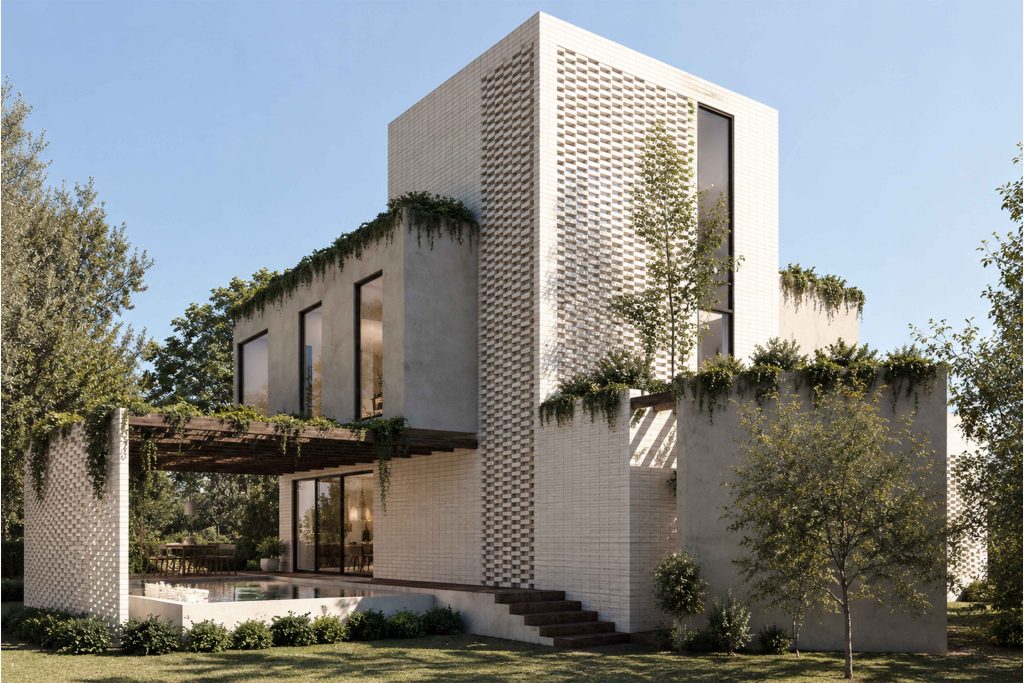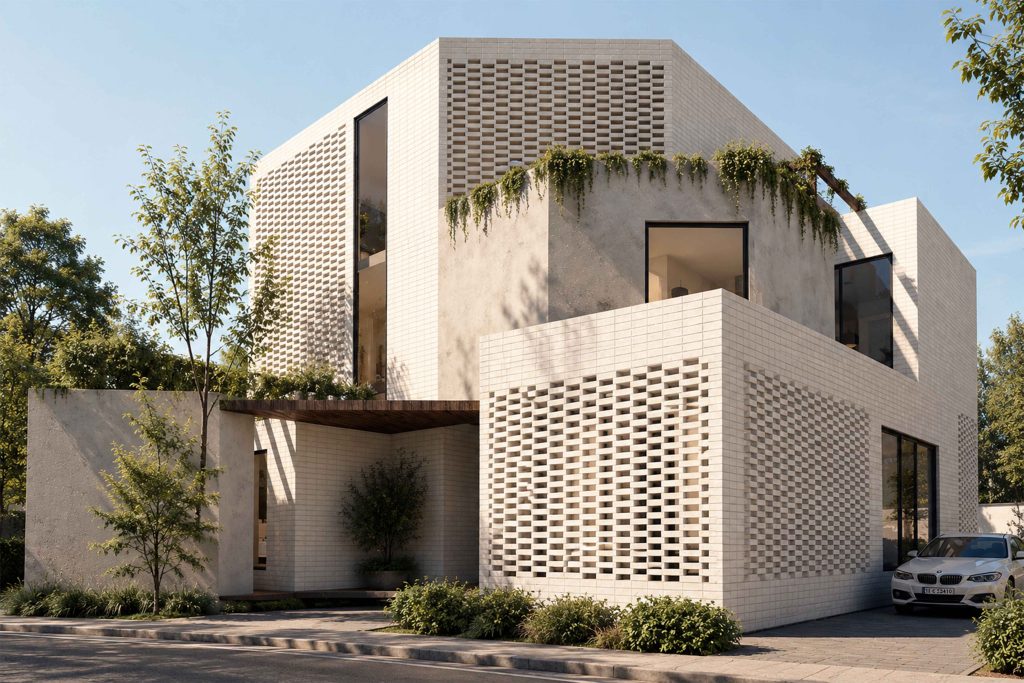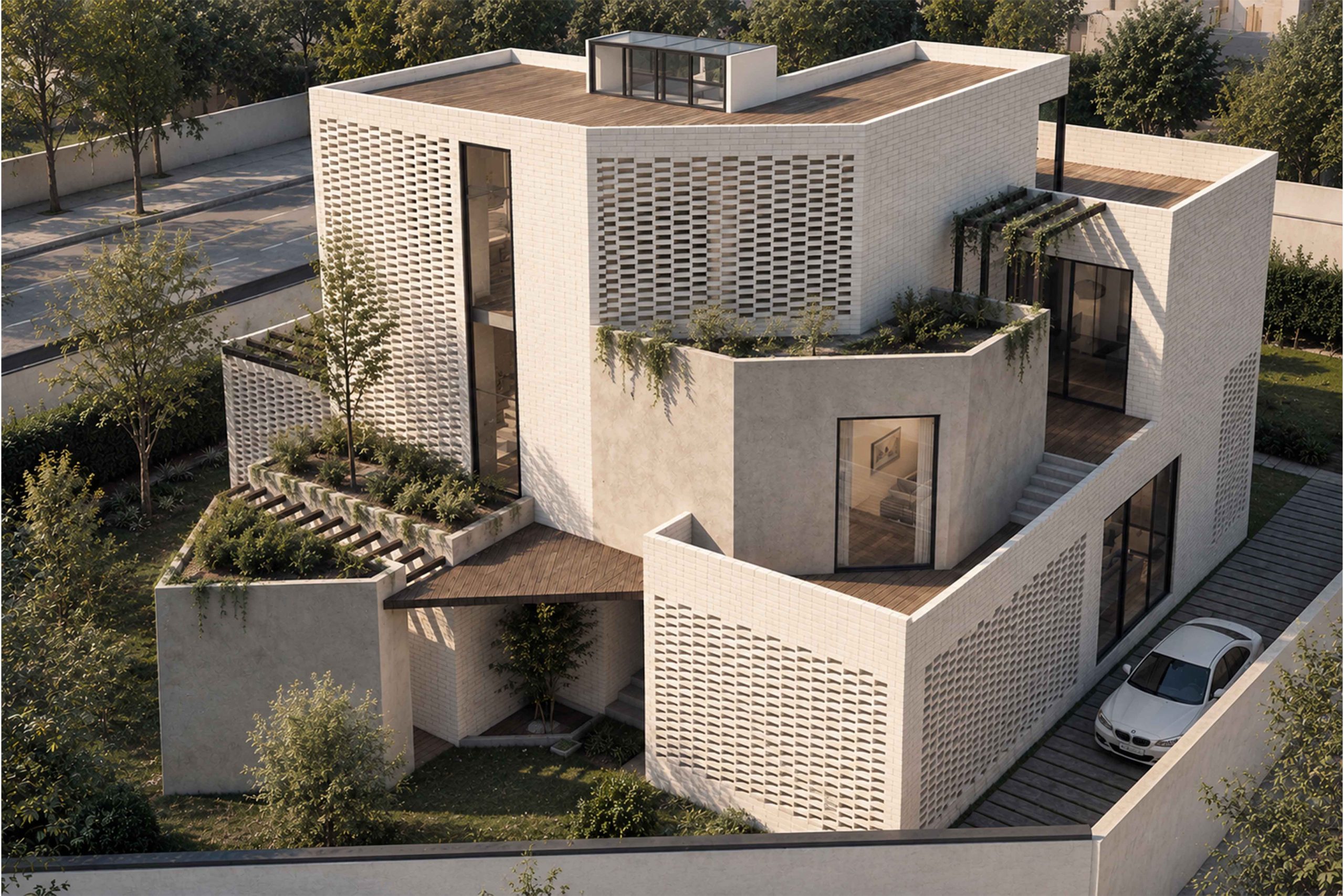
Nikan Villa is located on an elongated and irregular site in Lavasan. Its spatial organization responds simultaneously to two central requirements: preserving the privacy of family life while establishing a strong connection with the garden and surrounding landscape. The building is composed of distinct, clearly articulated volumes, while setbacks, terraces, and intermediate spaces create a layered transition between architecture and landscape.
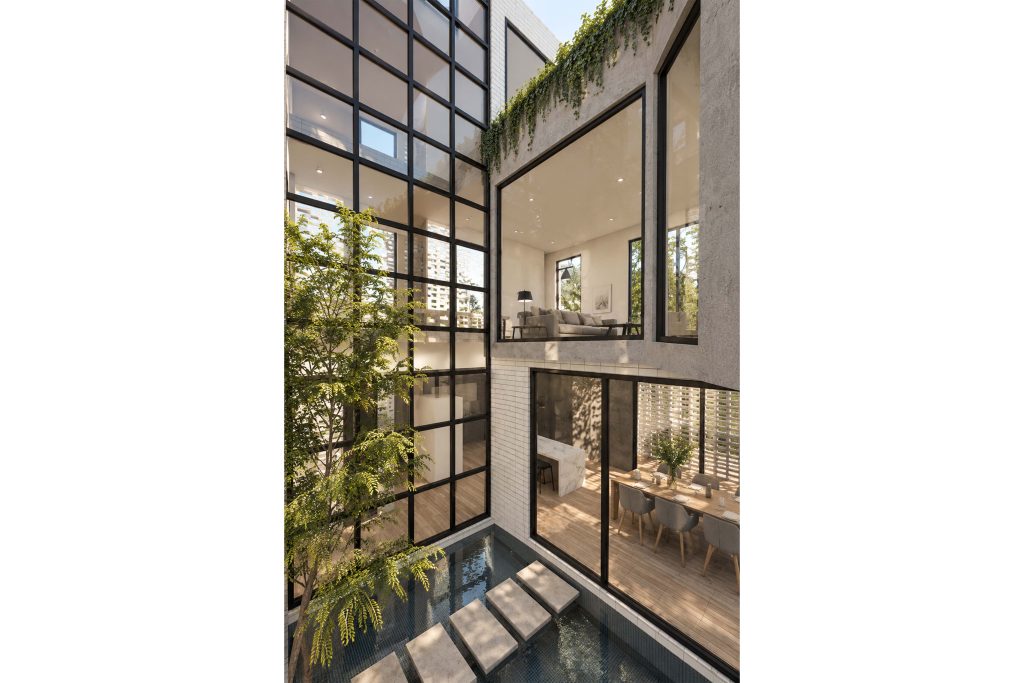
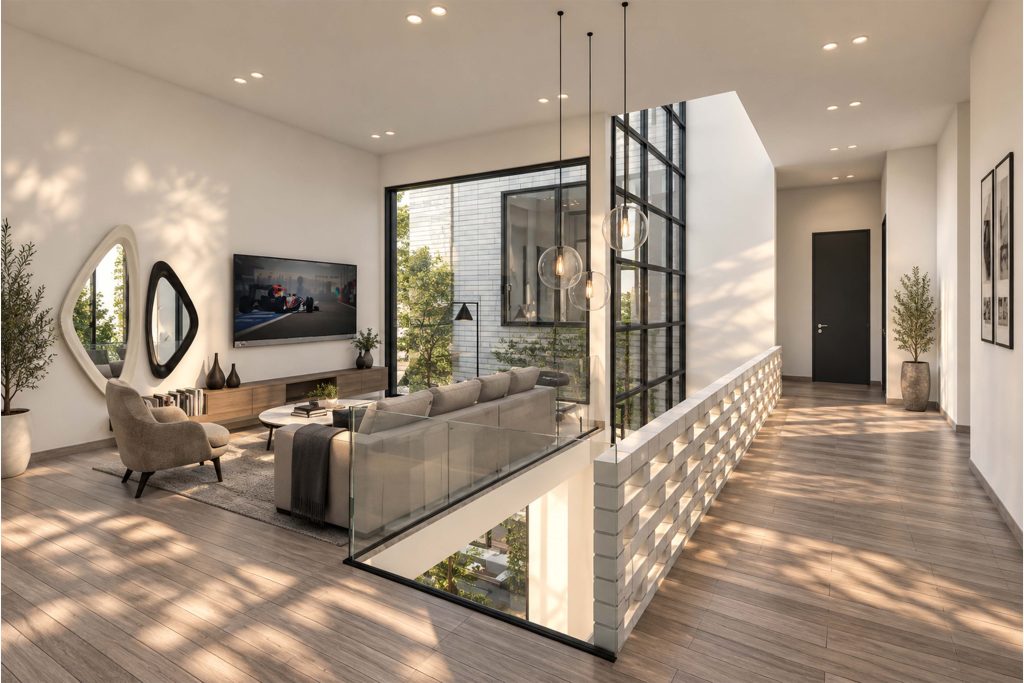
The control of light and visibility plays a central role in the façade. In certain areas, brick surfaces transform into permeable screens that regulate views, sunlight, and privacy without completely separating the interior from its surroundings. In contrast, generous openings facing the garden extend the living spaces toward terraces and outdoor areas. The dialogue between solid surfaces and transparent openings creates varying degrees of openness and enclosure throughout the house.
Landscape is not treated solely as an element surrounding the building. Green spaces enter the architectural composition through courtyards, terraces, and planted roofs, allowing the experience of the villa to unfold across a sequence of interior and semi-open environments. Despite its clear geometric language, Nikan Villa remains closely connected to its context through light, vegetation, and permeable architectural layers.